Showing posts with label Robert Duvall. Show all posts

Friday, April 03, 2020

Some random thoughts about Robert Duvall, Horton Foote, Tender Mercies and COVID-19


Today I received an advance copy of the May/June Cowboys & Indians magazine featuring my cover-story interview with Robert Duvall. And I must admit: When I opened the FedEx envelope, I felt at once extremely happy and unspeakably melancholy.

I felt happy, of course, because I always enjoy interviewing Robert Duvall — and not just because he always insists on my calling him “Bobby.” (Which I do, even though I cannot help thinking: “I am not worthy! I am not worthy!”) And seeing the cover reminded me of our most recent conversation, when we talked about everything from his plans to attend the Western Heritage Awards celebration at the National Cowboy and Western Heritage Museum in Oklahoma City — where he was slated to receive a lifetime achievement honor — to his experiences working with director Steve McQueen on 2018’s Widows. (“He’s a terrific director — one of the best I've ever worked with! I love working with that guy!”)

But I also felt sad when I remembered that we’d had that conversation before the full fury of COVID-19 began to be felt in this country — and, indeed, before the Western Heritage Awards had to be cancelled because, as long as we’re stuck in this Brave New World of The New Normal, such events are being postponed indefinitely, if not cancelled altogether.

So my mind started to wander. And I couldn’t help thinking of something I wrote about my favorite Robert Duvall movie of all time — Tender Mercies, the 1983 drama that earned Academy Awards for Duvall’s lead performance and Horton Foote’s original screenplay — just three years before Foote’s death in 2009.

“Several years ago, a colleague at the now-defunct Houston Post wrote a story about movies that some people – celebrities, mostly – like to watch over and over and over again on videocassette. (Hey, I told you this was several years ago.) When he ran out of really well-known folks to interview, he collared me in the newsroom and asked: ‘What movie do you watch repeatedly?’ And so I told him: ‘There’s something about Tender Mercies that deeply and profoundly affects me on so many levels that, yes, I’m addicted to watching it. Whenever I get depressed, I want to pop the tape into the VCR, and hear Robert Duvall say: “I don’t trust happiness. I never did, and I never did, never will.” God, I know exactly how he feels.’

“Flash-forward a few weeks: I am at Houston’s Stages Theatre for the opening night performance of Talking Pictures, a play by the great Horton Foote, the Oscar-winning scriptwriter of Tender Mercies (and To Kill a Mockingbird). There’s a post-performance party, and I’m off in a corner, munching on fried chicken I obtained from the bountiful buffet, when I spot Foote — who I’ve met maybe once or twice before that evening —across a crowded room. I nod, give him a thumb’s up — the play actually was quite good, and deserves to be revived — and go back to eating. Much to my surprise, however, Foote cuts short a conversation he’s having with someone, walks across the crowded room, makes his way over to me and, without a hint of irony, says: ‘Oh, Joe, I’m so sorry you get depressed…’”

To this day, I cannot understand why I didn’t break down crying right on the spot.

Masterfully directed by Bruce Beresford, Tender Mercies is a spare, subtle film that speaks in a quiet yet compelling voice about faith and despair, regret and redemption, lower depths and second chances, while considering the restorative potential of human and divine love. Duvall is absolutely heart-wrenching in his portrayal of Mac Sledge, a down-and-out country singer who’s redeemed by the love a good woman (Tess Harper), then pushed back to the brink by a devastating tragedy.

But as much as I admire his performance, and the movie that contains it, I’m not sure I can watch Tender Mercies again anytime soon. (And I am pretty damn certain I can't watch 1918, the 1985 film version of Foote's play that deals in part with the Spanish Flu epidemic.) Because, really, it’s no longer a matter of not trusting happiness. Rather, it’s a question of: When are we going to be happy, really happy, again?

Tuesday, January 19, 2016

Remembering Glenn Frey remembering Robert Duvall and Let's Get Harry -- and shooting down hopes for an Eagles reunion -- in 1986


(In 1986, while I was film critic for The Houston Post, I had the privilege of interviewing Glenn Frey while he was on a promotional tour for his first film, Let's Get Harry. On the occasion of his passing at age 67, I want to share this piece that originally ran on October 30, 1986.) 

First, there was the popular video — a mini-movie, really — for his hit single, ''Smuggler's Blues.'' Then there was his well-received guest spot as a seedy pilot on the Miami Vice episode based on the same song. And now, Glenn Frey, the singer-composer who continues to soar on the charts long after leaving The Eagles, has a key supporting role in a feature film: Let's Get Harry, an action-adventure set to open Friday nationwide.

What's next? The romantic lead in a Hollywood blockbuster?

“If I could stretch that far,” Frey said a few days ago in his Inn on the Park suite, “I would like that. But with my limited experience in this field, I'm looking for safe parts right now. I don't want to overextend myself, or have a French accent, or do something I might not be able to handle at this early stage of my acting development.”

In Let's Get Harry, Frey plays Eddie Spencer, one of five small-town men who embark on a renegade rescue mission when their best friend, Harry, is kidnapped by drug smugglers while working on a dam project in South America. Led by a ruthlessly efficient mercenary played by Robert Duvall, the working-class commandos make their way into the wilds of Colombia.

When they reach the den of the drug smugglers, however, there's some doubt as to whether Frey's character, a cocaine abuser, will withstand the temptation of being near so much nose candy. With his background as a musician, Frey joked, “Maybe the producers thought I knew a little bit more about this subject than other people.

“But that didn't bother me. The thing that was attractive about Spence was, he's just a regular guy with a cocaine problem. And I think there's a lot of people like that. You know, you have the classic line, where Spence says, ‘It's cool, I can handle it.’ Which is what every junkie says. Even when they're doing five grams a day, they'll say, ‘It's cool, I'm not addicted, everything's fine.’”

Frey, a bearishly-built Detroit native with a lightly sandpapered voice and an ingratiating bent for self-mockery, looks at Let's Get Harry as an educational experience. He was especially eager to work with such respected actors as Duvall and Gary Busey. His enthusiasm waned only slightly when he found himself unnerved by Duvall's mercurial mood swings.

According to Frey, Duvall would often shatter the silence on the set in Mexico by shouting, without warning, What am I doin' in a movie with a rock star!?!” Frey couldn't tell for certain whether Duvall was joking. But the animosity, real or affected, brought a certain vigor to the scene where Duvall punishes Frey for opening a door without first determining who's on the other side.

“Yeah,” Frey said with a grin, “we had a real good time doing that one. That particular day, Duvall wouldn't talk to me. In between takes, he wasn’t around — he'd be standing outside in the hall, pacing back and forth. And then we'd do another take, and I'd open the door — and he’d slam me up against the wall. I think he wanted to do that anyway. It was always, ‘A (expletive deleted) rock star! I'd work with a million Gary Buseys before a rock star!’

“And then, when they filmed my reaction shot, he held this knife this far away from my throat, and yelled, ‘I could kill you right now, you . . . punk!’ And then he just let me go. They started rolling the camera — and I wasn’t acting. I was completely in shock.

“That was kind of interesting. But it wasn't exactly fun.”

So what does Frey think of his performance in Let's Get Harry? “I’d say I was adequate. I don't think I was terrific, but I certainly didn't stink it up.

“I was kind of pleasantly surprised, actually. I was very skeptical. While we were doing the film, nobody saw any rushes, nobody saw any dailies. So I really didn't know what to expect. But when I saw the first screening, I was a little bit surprised that I was able to just watch this guy with the mustache.”

As Frey sees it, the only serious drawback to working in movies is the lack of artistic control. “I'm not used to not having control,” he said. “When we make records, what I turn into the record company is what gets pressed, and what comes out. It's not like somebody at MCA Records says, ‘Well, I think we should edit the bridge out of that, and add some bongos.’

“But in the film business — and I was quite surprised by this — it's art by committee. After they shoot all the preliminary footage, and do the director's first cut, they bring in four or five people who know absolutely nothing about film, but are in charge.”

In the case of Let's Get Harry, Frey noted, director Stuart Rosenberg (Cool Hand Luke, The Pope of Greenwich Vilage) had his name removed from the film after producers insisted on re-cutting and re-shooting certain scenes. (The movie is now credited to the pseudonymous Alan Smithee.) That's the sort of artistic conflict Frey rarely has to worry about in his recording career.

When Frey recorded his last album, The Allnighter, Elektra-Asylum, his label at the time, was less than enthusiastic. (“One of their comments was, ‘You know, it's not very contemporary.’ And I said, ‘Exactly. And I don't want it to be.’”) Unperturbed, Frey brought the album — which featured “Smuggler's Blues” — to MCA Records, the label that eventually released it.

“Fortunately,” Frey said, “I was sort of vindicated. The Allnighter is sort of like Lazarus. It came out, and sold about 200,000 copies, and disappeared. And then Miami Vice, and the re-release of  'Smuggler's Blues,’ put the damn thing right back on the charts, and I ended up selling 300 or 400,000 more copies. So that was very gratifying.”

If he can continue releasing albums like that, Frey said, you can definitely forget all the wishdreaming rumors about a possible Eagles reunion.

“So if you hear about an Eagles reunion — you can bet your life that I've got income tax problems.”

Saturday, February 21, 2015

Oscar nominee Robert Duvall: On losing control in The Judge, taking charge in Wild Horses


In the unlikely event you’ve ever doubted Robert Duvall’s fearlessness as an actor, take another look at that scene in The Judge where his character – Joseph Palmer, an aging magistrate who’s suffering through the side effects of chemotherapy -- is embarrassingly incontinent.

Clad only in his undershorts, Duvall looks every minute of his 80-plus years as Joseph struggles, and fails, to regain his footing after collapsing while upchucking into the toilet of his upstairs bathroom. At first, he pridefully pushes aside an offer of assistance from Hank (Robert Downey Jr.), his hot-shot lawyer son. But he relents – reluctantly – and manages to get to his feet, just as he starts to soil himself. Awkwardly, Hank and his father gravitate toward the shower, where Joseph – alarmingly pale and frail, sadly resigned to his humiliation – must rely on his son’s help to wash away the mess.

It’s an impressively powerful scene in a criminally under-rated film, one that reveals both the weakness and resilience of Duvall’s character – who, not incidentally, can’t remember whether he’s actually guilty of a murder he stands accused of committing – and the forging of something like a nonaggression pact between Hank, who’s serving as Joseph’s defense attorney, and his long-estranged father.

And it’s the scene that caused Duvall to very nearly pass on The Judge.

“Yeah,” Duvall told me over lunch last fall at the Toronto Film Festival, “I turned it down. “I said, ’A guy who shits himself? I don’t want to do that.’ But my agent, Nigel Meiojas -- he talked me into doing it, Nigel did. If it weren’t for him, I probably would be saying, ‘I don’t want to do it’ to this day. “But once I decided to do it, I had to really jump in and just do it.”

Indeed, Duvall did it so well that he earned a Golden Globe nomination for Best Supporting Actor – and could score an upset Sunday evening during the Academy Awards presentation. (That would make Duvall a two-time Oscar winner, after his Best Actor prize for Tender Mercies.)

But was there another reason for his initial reluctance to play the title role in The Judge? Specifically: Did he view the ailing and incontinent Joseph Palmer as a worst-case-scenario future version of Robert Duvall?

“I gave that a fleeting thought, maybe,” Duvall conceded. “But, look: My wife looks after me, and I try to keep in shape. My younger brother died of cancer, got a disease, and I know that’s a pretty terrible thing. But I try to, each day, face the day in a positive way, hopefully.”

During our long lunch break, Duvall repeatedly praised co-star Robert Downey Jr. – “I really like him. A good man, a good man.” – and expressed gratitude for the rehearsal time the cast was granted by director David Dobkin.

“Actually,” he recalled, “we sat down one afternoon at a hotel, and we started an improvisation. And we did it for an hour and fifteen minutes, all of us -- Downey, too -- talking about different subjects as the characters. It really worked out, helping us unify ourselves, and meld, you know? Dobkin was willing to sit back and watch that, to see how that formed. It was nice, to form friendships as actors and as the characters, too, so that really helped.

“Sometimes, during rehearsal period, you just keep going over the lines. ‘What does that mean? What does this mean?’ You try different things. But that one improvisation was a great, great thing to do.

“I think that some of the modern-day directors are a little more appreciative of the actor, rather than trying to control them. Some of the old guys – well, I still tell the story about Henry Hathaway, I worked with him on True Grit, and he said to [Glen Campbell], ‘When I say action, tense up, goddamnit!’ It’s not a good thing to do.

“But you know,” Duvall added with a soft bark of a laugh, “even now, it’s still the same: They say action, and they say cut – and you’ve got to come up with something in between, right? It’s kind of like playing house. Kids play house. We play house as adults for money. It’s the same thing: make-believe. You play the father, I play the son – you know? And now I’m the judge, you’re my son. But it’s the same as when you were a kid.”

Now 84, Duvall maintains his youthful enthusiasm for acting – and continues to extend his resume with credits on both sides of the cameras. In fact, he almost didn’t make it Toronto to publicize The Judge because, at the time, he was working as director on another project: Wild Horses, a small-budget drama in which he appears alongside his wife, Luciana Duvall, and co-stars James Franco and Josh Hartnett.

“Warner Bros. wound up paying for an extra day of shooting [on Wild Horses],” Duvall said, “and they offered to fly me up here on their private jet. I figured that would be as close as I’d ever come to their private jet, so I said OK.”

For all his complimentary words about The Judge in general, and Downey and Dobkin in particular, it’s obvious that Wild Horses – which is slated to have its world premiere next month at the SXSW Film Festival – is a film much closer to Duvall’s heart.

“We had a wonderful cast, but we only had $2 million to do it, and 23 days. But we did it, and I think it worked. It is kind of a complex story about a guy who has a ranch, and he runs his son off the ranch, at gunpoint, 15 years ago, because his son is gay. The son comes back, 15 years later, for the reading of the will. We got Franco to play that part. That was a quirky part.”

So what is James Franco really like?

“A bit of a whacko,” Duvall replied without hesitation – and with, it should be noted, a wide grin. “But you ought to see him ride a horse. Terrific. And he can do many things, like take a page of dialogue and know it in six minutes. He is very, very, very, very quick. We only had him for five days. We couldn’t get him for six or seven. So we really had to hustle.”

Duvall reportedly is set to reunite with Franco and Judge co-star Vincent D’Onofrio for In Dubious Battle, a drama (directed by Franco) based on the John Steinbeck novel of the same title. After that? There had been talk – lots of talk, actually – that he would star in Terry Gilliam’s long-delayed The Man Who Killed Don Quixote. Now, however, it appears that project is going in a different direction, with a different actor. But never mind: Duvall doesn’t seem to be a man who spends many sleepless nights in dread of long-term unemployment.

“Sometimes things are planned,” he said, “and then something will come around the corner and be better than what you’re planning. Like a surprise, you know?”

Monday, February 16, 2015

I want to hear the lamentations of the Oscar bloggers!


What do I want to happen Sunday night during the Oscarcast? Total chaos. Astounding upsets. Epochal disruptions of the space-time continuum. Weeping and wailing, heads exploding, dogs and cats living together...

In short: I want the bloviating Oscar bloggers to be battered and flabbergasted. After lo these many months of endless handicapping, it's no longer a question of who I think will or should win. No: At this point, to paraphrase Michael Caine in The Dark Knight, I want to see the world of the Oscar bloggers burn.

Yes, that's right: I want American Sniper -- or, better still, Selma -- to claim Best Picture. I want Benedict Cumberbatch to snatch the Best Actor prize, and Rosalind Pike to strike Oscar gold as Best Actress. I want to see Wes Anderson tell his fellow Best Director nominees: "Back off, bitches! This motherfucker is mine!" I want Meryl Streep to go for the gusto and grab the Supporting Actress award.  And I really, really want Robert Duvall to wrap his fingers around the Supporting Actor statuette, and tell anyone who doesn't like it to kiss his 84-year-old ass. 

So there.

Think I'll go lie down now.


Thursday, January 15, 2015

Now that the nominations are in, here are the Oscar odds


Courtesy of Bovada, here are the Oscar odds laid down by sports publicist Jimmy Shaprio.

Best Picture

Boyhood 1/14
The Grand Budapest Hotel 12/1
Birdman 14/1
Selma 18/1
The Imitation Game 20/1
Theory of Everything 25/1
Whiplash 50/1
American Sniper 50/1

Best Director 

Richard Linklater - Boyhood 1/14
Alejandro Gonzalez Inarritu - Birdman 13/2
Bennett Miller - Foxcatcher 25/1
Morten Tyldum - The Imitation Game 25/1
Wes Anderson - The Grand Budapest Hotel 25/1

Best Actor 

Michael Keaton - Birdman 4/5
Eddie Redmayne - The Theory of Everything 1/1
Benedict Cumberbatch - The Imitation Game 12/1
Steve Carrell - Foxcatcher 25/1
Bradley Cooper - American Sniper 33/1

Best Actress 

Julianne Moore - Still Alice 1/20
Reese Witherspoon - Wild 10/1
Rosamund Pike - Gone Girl 20/1
Felicity Jones - The Theory of Everything 20/1
Marion Cotillard - Two Days One Night 33/1

Best Supporting Actor

JK Simmons - Whiplash 1/18
Edward Norton - Birdman 9/1
Mark Ruffalo - Foxcatcher 12/1
Ethan Hawke - Boyhood 20/1
Robert Duvall - The Judge 33/1

Best Supporting Actress 

Patricia Arquette - Boyhood 1/25
Emma Stone - Birdman 12/1
Keira Knightley - The Imitation Game 20/1
Laura Dern - Wild 20/1
Meryl Streep - Into the Woods 25/1

Call me a sentimentalist, but I'm putting my money down on Robert Duvall (pictured above) for an upset. Of course, when I was in Las Vegas last August, I wagered $100 for my beloved New Orleans Saints to win the Super Bowl this year, so you might want to think twice before heeding my handicapping.

Monday, March 10, 2014

SXSW: Robert Duvall and A Night in Old Mexico


I'm really, really glad I liked A Night in Old Mexico, the engaging comedy-drama that had its North American premiere Monday at SXSW. And not just because the picture -- a Tex-Mex-flavored shaggy-dog story with a touch of Elmore Leonard to its twisty plot -- is a worthy star vehicle for the great Robert Duvall. Another good reason for my being happy: I was committed to doing an interview with Duvall for Cowboys & Indians magazine during the festival.

Granted, I chatted with the Oscar-winning screen icon a day before my Variety review appeared on line, at a time when, theoretically, he would not have known what I thought about his movie. And maybe, had I not found it up to snuff, I could have lied if he'd asked me point blank for my appraisal.

But here's the thing: I don't think it's possible to lie to this guy. As I have noted during previous encounters: He looks you right in the eye, and expects you to tell him the truth. And so you do. And if I had disliked A Night in Old Mexico -- that would have made for a very awkward interview. Indeed, I probably would have wimped out and called in sick or something. Look, it was very cold and rainy here in Austin last Saturday evening. I'm pretty sure I could have pulled it off if I'd picked up the phone Sunday morning and, while faking a coughing jag, told the publicist: "Gosh, I'm sorry, but I sure don't want Mr. Duvall to catch what I have..."

I can think of three or four times over the years when I actually have canceled interviews with actors or directors at film festivals after I saw their movies, and found them wanting. No, I'm not naming any names. But I will say this: In one case, the publicist practically begged me to reconsider -- because several other journalists had canceled their interviews with the director as well. I said I was sorry, but I was so sour on the director's movie that I feared I could not remain polite during any conversation I might have with this obviously untalented poseur.

That director went on to earn an Academy Award nomination, and win quite a few other prizes, for directing one of my favorite films. Go figure.

By the way: While standing in line for great barbecue this evening with some fellow Variety writers at Iron Works BBQ, I struck up a conversation with a young woman who's also attending SXSW this week. When she asked if I'd done anything exciting so far, I told her I'd interviewed Robert Duvall. Her reply: "Who's that?" I rattled off the titles of six or seven movies before she was able to connect the name with a face. And even then, she wasn't entirely sure she remembered "the napalm guy" from Apocalypse Now all that clearly. Oh, dear...   


Thursday, February 27, 2014

Lonesome Dove: 25 years later


As I have previously noted: In my other life, I am a cowboy. Specifically, a contributing editor for Cowboys & Indians, The Premier Magazine of the West. And I must admit: Some contributions are more fun to contribute than others.

To celebrate the 25th anniversary of the classic Lonesome Dove miniseries, I recently interviewed Australian filmmaker Simon Wincer, a droll raconteur who shared all sorts of colorful stories about directing the epic adaptation of the Pulitzer Prize-winning Larry McMurty novel.

But wait, there's more: I also got to write about Lonesome Dove co-stars Robert Duvall and Rick Schroeder (pictured above). And... well, I finally got a good excuse to rip the shrink-wrap off the long-on-my-shelf Blu-Ray of Lonesome Dove, and savor the miniseries in widescreen splendor on my high-def Vizio TV. Life is good.

Thursday, August 12, 2010

Robert Duvall talks about (among other things) Get Low


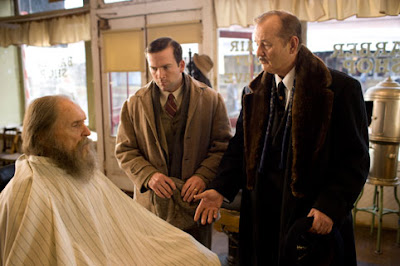
Robert Duvall and I are tucked away in a quiet corner of the spacious lobby of a luxurious Los Angeles hotel, largely hidden from the view of passers-by, and our freewheeling conversation often has an almost conspiratorial tone. We’re supposed to be talking about Get Low – the exceptionally fine comedy-drama opening Friday in Houston – for a cover-story profile I’m preparing for Cowboys & Indians magazine. But, hey, I did say this was a freewheeling conversation, right? And besides: While he would prefer not to name names – well, not for the record, anyway – really, some anecdotes are too juicy, and some episodes are too flat-out bizarre, not to share.

“I guess it’s like they say,” Duvall begins. “You have to be careful what you wish for.”

In this particular case, Duvall had been greatly impressed by the bravura performance of a flamboyant European actor in an Oscar-nominated film, and remarked to many interviewers at the time that he’d appreciate the opportunity to work with this fellow. So, of course, he jumped at the chance to appear opposite the guy in an independent film directed by an idiosyncratic, cult-fave filmmaker.

Early in the production, however, Duvall discovered that the director, for all his visual flair, left a lot to be desired when it came to communicating with actors. (And not just because English was his third or fourth language.) Worse, the actor Duvall had admired on the screen turned out to be an overbearing, camera-hogging prima donna on the set.

“Totally unprofessional,” Duvall says, practically spitting out the words in the manner of someone snapping an obscenity. “He would come into scenes, into the frame, and try to intimidate you – try to push you off your mark. Or lean into the shot, like he wanted to upstage you. Finally, I had enough of this. So the next time he did something like this, bent over this close to me in a shot – I started singing.”

Say what?

“I started singing,” Duvall says, his chuckle slowly escalating into full-throated laughter. “Just bent right back into his direction, got my face up close to his, and then” – try to imagine the sound of Rudy Vallée warbling through a megaphone here -- “What a difference a day makes, twenty-four little hours…”

Not surprisingly, “The guy backed off after that. I think he thought I was nuts.”

Don’t misunderstand: Duvall, still impressively robust at age 79, normally isn’t the temperamental type. He’s not known for diva-style self-indulgence, and his collaborators – co-stars, directors, screenwriters, whatever – often go out of their way to sing his praises and salute his professionalism. “He’s such an amazing actor,” says Get Low co-star Sissy Spacek, “that he simply is the character. He doesn’t act the character, he becomes the character. And so, really, when you’re working with Bobby, you just have to react.”

On the other hand: Duvall isn’t shy about standing his ground while arguing over which way is the right way to play or shoot a scene. During the mid-1980s Texas location filming of Tender Mercies, the movie that enabled him to claim his first Oscar as Best Actor, he and director Bruce Beresford (whose filmed-in-Houston Mao’s Last Dancer opens next week in theaters nationwide) sporadically clashed while seeking common ground. For that, he makes no apologies.

“Sometimes,” Duvall says, “when you have a little turmoil, things can turn out better than if you had total harmony.”

To be specific, he points to what arguably is the most affecting scene in Tender Mercies, when washed-up country music singer Mac Sledge (Duvall) mourns the tragic death of his daughter while tilling the garden of the woman (Tess Harper) who has given him his last best shot at redemption. (“I don’t trust happiness,” he says, barely tamping down his rage and anguish. “Never did, never will.”) After a long and, ahem, animated discussion, Beresford and Duvall agreed: Keep it simple, straight from the heart.

“That was a nice scene,” Duvall recalls. “And I remember saying to [Beresford], ‘Look, I don’t want to do a lot of coverage. I don’t want to loop dialogue afterwards.’ And I’m glad they didn’t use close-ups while I’m working in the garden there. The scene was nice. And the cinematographer had some great ideas: Low angles, wide shot. Simple.”

To hear Duvall tell it, the collaborations were smoother and tempers were cooler during the filming of Get Low, a small-budget, beautifully crafted labor of love that casts a well-nigh irresistible spell while spinning a Depression Era folk tale from the Tennessee backwoods. Duvall compellingly underplays the larger-than-life lead role of Felix Bush, a notorious hermit who rejoins society only to plan his own funeral party, and he’s backed by smartly cast supporting players – including, in addition to Spacek, Bill Murray and Lucas Black -- who clearly savor the twofer of portraying vividly drawn characters opposite a much-respected living legend.

“Robert is a unique cat,” Murray said during the launch of Get Low at last year’s Toronto Film Festival. “There’s only one drum that’s marching in that head, so when you watch him work, he’s just a magnet. It was a lot of fun to watch him carry this relentless confessional story all the way to its conclusion.”

It’s a story loosely based on a real-life incident, written by Chris Provenzano and C. Gaby Mitchell as a seriocomic fable of forgiveness and redemption, with Felix gradually revealed as man who’s genuinely curious to hear what others have to say about him at his premature funeral, but absolutely certain that anything anyone has to say can’t be worse than his own testimony about himself.

Duvall intends it as the highest of compliments when he says that the Get Low script reminded him of stage plays and screenplays by the late, great Horton Foote, a longtime friend and collaborator who earned Academy Awards for writing the 1962 film version Harper Lee’s To Kill a Mockingbird (in which Duvall made his movie debut as the eccentric Boo Radley) and the aforementioned Tender Mercies.

“In fact,” Duvall says, “I’ll tell you a very interesting story. The day when we filmed the funeral service, when they brought the casket onto the set, and I was getting ready to give this speech to the people – my wife got a phone call about Horton Foote’s death at that very moment. Very spooky. It felt like things were moving full circle. Because, you know, my first part in a movie was in To Kill a Mockingbird. So it was almost like Horton was there – spiritually -- witnessing this film, too.”

And speaking of first-timers: Although Aaron Schneider won an Academy Award for Best Dramatic Short -- the William Faulkner-inspired Two Solders – he had never directed a dramatic feature before Get Low. Did Duvall have any qualms about playing such a complex role under the guidance of a relative neophyte? Not really.

“I’ve worked with a lot of first-time directors,” he says. “I met George Lucas while I was making [Francis Coppola’s] The Rain People. He was Francis’ production assistant. I mean, here was this guy, about 108 pounds, running around with the Nagra camera, doing his thing. And then we go on to do this feature, THX-1138, and he’s using two cameras, shooting in 16 mm – and it was like he’d been doing it for 25 years. Twenty-five years the right way. And yet it was his first film.

“So after that, I’ve always felt, hey, you meet somebody, you get a sense of somebody -- and if it’s a good project, why not?”

Tuesday, July 27, 2010

Getting excited about Get Low


The lovely and talented Anne Thompson shares my high regard for Get Low, which opens Friday in New York and Los Angeles, and suspects, as I do, that it will be a credible contender for glittering prizes. ("I want to see how the movie plays at the Academy. It should be a soft lob down the middle for Oscar voters.") She'll soon post interviews with lead player Robert Duvall and producer Dean Zanuck (son of Richard, grandson of Darryl) on IndieWire. While you're waiting, here's another peek at my Cowboys & Indians piece on this marvelous movie and its mighty star.

Tuesday, June 08, 2010

Getting down with Get Low star Robert Duvall

Sometimes, I really love what I do what for a living. Like, when I get to talk to living legends like Robert Duvall about great movies like Get Low.

Tuesday, February 16, 2010

A moment of Zen

On a day like today, when I have a long lunch with Robert Duvall, and we talk about everything from M*A*S*H  to Get Low, and everyone from Horton Foote to Bill Murray, and I know I'm getting paid for this... I thank God that my father left Ireland and moved to the Land of Opportunity.

Monday, September 14, 2009

TIFF review: Get Low

With meticulously variegated measures of sly humor, homespun grace and affecting poignancy, Get Low casts a well-nigh irresistible spell while spinning a Depression Era folk tale from the Tennessee backwoods. Robert Duvall compellingly underplays the larger-than-life lead role of Felix Bush, a notorious hermit who rejoins society only to plan his own funeral party, and he’s backed by smartly cast supporting players (including Bill Murray and Lucas Black) who clearly savor the twofer of portraying vividly drawn characters opposite an Oscar-winning living legend. Appreciative reviews and savvy marketing could attract adult ticketbuyers, especially if this polished indie production emerges as a credible contender for glittering prizes. You can read my complete Variety review here.

Sunday, September 16, 2007

Westerns rope Emmys

Maybe Westerns really are back in fashion. On the same weekend that 3:10 to Yuma managed to sustain its opening weekend momentum at the theatrical box-office, Broken Trail lassoed a passel of prizes, including the award for Best Miniseries, during the Emmy Awards extravaganza. Robert Duvall was honored as Best Actor in a miniseries, and Thomas Haden Church received the Best Supporting Actor prize. But wait, there's more: Bury My Heart at Wounded Knee -- the HBO adaptation of the Dee Brown best-seller -- was honored as Best Made-for-Television Movie.

Thursday, July 19, 2007

Cowboys and Indians and Emmys

Westerns may be scarce at megaplexes these days, but they're attracting viewers -- and earning honors -- on television. Indeed, you could say the Emmys went Western this morning, as the Academy of Television Arts and Sciences announced 17 nominations for Bury My Heart at Wounded Knee, the epic HBO movie based on Dee Brown’s non-fiction best-seller, and 16 for Broken Trail, the AMC miniseries starring Robert Duvall and Thomas Haden Church.

Wounded Knee loomed large in the marquee category of Outstanding Made for Television Movie, Broken Trail rode tall among the Outstanding Miniseries nominees, and, not surprisingly, Duvall was nominated as Outstanding Lead Actor in a Miniseries or Movie.

In several other categories, however, the Westerns will be competing against each other for top honors. For example, Church will face off against Wounded Knee co-stars August Schellenberg (as Sitting Bull) and Aidan Quinn (Sen. Henry Dawes) for Outstanding Supporting Actor in a Miniseries or Movie; Greta Scacchi (Broken Trail) and Anna Paquin (Wounded Knee) are rivals for Outstanding Supporting Actress in a Miniseries or Movie; and Walter Hill (Broken Trail) and Yves Simoneau (Wounded Knee) are among the honorees for Outstanding Directing for a Miniseries, Movie or Dramatic Special.

Speaking of Hill: After Thursday's early-morning Emmy announcement, the veteran filmmaker (whose feature credits include the Westerns Wild Bill, The Long Riders, and Geronimo: An American Legend) seemed at once grateful and flabbergasted that Television Academy voters would be so appreciative of Broken Trail. "What can I say?” he told the Associated Press. “They're too kind. We were on so long ago, we were on last June, so I've been surprised and very pleased that people remember."

Dick Wolf, executive producer of Wounded Knee, said the clutch of nominations for his HBO movie was a validation of a very difficult project: "Anybody who says it's not nice or it doesn't mean anything to get this many nominations, it's the ultimate sour grapes because it sure feels great.”

(A complete list of all Emmy Award nominations is available here.)